Houston, Texas
Call · (346) 622-9580
Houston, Texas
Call · (346) 622-9580



Choosing a place to live is an important decision, especially when you have a family. Beyond finding a comfortable home, you may want to live near good schools, parks, shops, healthcare services, and places where everyone can enjoy their free time. Houston offers a wide variety of neighborhoods and nearby communities, each with its own atmosphere, advantages, and lifestyle. Understanding these differences can help you compare your options, set realistic expectations, and find a place where your family can feel comfortable as you build your daily routine.
What makes an area suitable for families in Houston?
Finding a suitable neighborhood involves more than looking at houses or comparing property prices. Families often need a combination of practical services, comfortable surroundings, access to education, and opportunities to spend time together. Houston is a large metropolitan area with a wide range of residential communities, from established neighborhoods close to the city center to suburban developments with larger homes and planned recreational spaces.
For this reason, it is helpful to consider how each area fits your family’s everyday needs. A neighborhood that works well for a family with young children may be different from one that suits teenagers, parents who commute to downtown Houston, or households that need extra space for working from home. Thinking about these details before choosing a location can make the search more organized and help you focus on the places that offer the right balance for your circumstances.
Access to schools and educational resources
Access to educational resources is an important consideration for families researching the areas of Houston to live, particularly when children attend public schools or participate in specialized academic programs. The Houston metropolitan region includes multiple school districts serving different neighborhoods and surrounding communities. However, school attendance boundaries do not always follow municipal limits or postal addresses, meaning two nearby properties may belong to different districts or have different assigned campuses. Buyers should therefore verify educational assignments using the exact property address before making decisions based on proximity to a particular school.
The Texas Education Agency provides official information about school districts, educational resources, and accountability reports. Families can use these resources to begin researching academic options, while confirming attendance zones and enrollment requirements directly with the relevant district. When comparing schools, it is helpful to consider curriculum offerings, language programs, special education services, extracurricular opportunities, and available transportation. These details often provide a more complete understanding of educational options than relying exclusively on general rankings or online reviews.
Educational convenience also extends beyond the classroom. Families may benefit from examining the proximity of libraries, tutoring centers, childcare facilities, sports programs, and other educational resources. A school located a short distance from home may still involve longer travel times because of traffic patterns, designated drop-off areas, or transportation arrangements. Before selecting a neighborhood, consider how school schedules, after-school activities, and parents’ working hours fit together. This approach helps families choose a location that supports both educational needs and daily responsibilities.
Safety and the feeling of community
Neighborhood conditions play an important role when evaluating the best areas of Houston to live, but they should be assessed through reliable information rather than general assumptions about a community’s reputation. Buyers can begin by examining public infrastructure, traffic patterns, pedestrian accessibility, street lighting, and the maintenance of surrounding properties and public spaces. These characteristics influence how convenient a location may be for daily activities such as walking, driving, shopping, or accessing nearby facilities. Because neighborhoods can contain different residential and commercial sections, evaluating the specific streets surrounding a potential home is more useful than relying on broad descriptions of an entire area.
Public safety information should also be reviewed using available reports from the relevant law enforcement agencies. For properties within the City of Houston, buyers can consult information published by the Houston Police Department, while homes in surrounding municipalities or unincorporated areas may fall under different law enforcement jurisdictions. When interpreting crime data, it is important to consider the reporting period, incident categories, geographic boundaries, and limitations of the available information. A neighborhood’s conditions may change over time, and general statistics should not be treated as guarantees about any individual street or property.
Visiting a neighborhood at different times of day can provide valuable observations that online listings cannot fully communicate. For example, weekday mornings may reveal school-related traffic, while evenings can help buyers evaluate street lighting, parking availability, and commercial activity. It is also useful to observe construction projects, road conditions, noise levels, and pedestrian routes between the property and nearby destinations. Combining these visits with official information and a review of the surrounding infrastructure provides a more balanced understanding of whether the location matches a buyer’s lifestyle and expectations.
Parks, playgrounds, and outdoor activities
Outdoor recreation is another important factor when comparing different areas of Houston to live, especially for households that enjoy walking, cycling, sports, or spending time in public green spaces. Houston and its surrounding communities offer a variety of recreational environments, including urban parks, neighborhood playgrounds, walking trails, swimming facilities, and sports fields. Access to these amenities can influence how frequently residents participate in outdoor activities and whether recreational outings require extensive driving. When evaluating a neighborhood, buyers should consider not only the number of available parks but also their proximity, facilities, accessibility, and suitability for preferred activities.
Several Houston-area communities offer distinctive recreational options. The Woodlands is recognized for its network of pathways, wooded surroundings, and parks distributed throughout its residential villages. Katy, Cypress, Sugar Land, and Pearland also include developments with playgrounds, community pools, sports facilities, and shared green spaces, although amenities vary between subdivisions. Within Houston, destinations such as Memorial Park provide opportunities for walking, running, cycling, and other recreational activities. However, living within a community that contains a major park does not necessarily mean the facility is within walking distance of every property.
Houston’s climate should also influence how buyers evaluate outdoor amenities. Summer temperatures and humidity can make shaded playgrounds, covered seating areas, swimming pools, and indoor recreation centers particularly valuable during warmer months. Families should examine available restrooms, drinking water, parking areas, walking paths, and any restrictions associated with community facilities. It is equally important to determine whether access requires a homeowners association membership or additional fees. Selecting a neighborhood with recreational options that are practical to use regularly can help residents incorporate outdoor activities into their everyday routines.
Housing options and everyday affordability
Houston’s residential market offers a wide range of property types, making housing options a key consideration when researching the best areas of Houston to live. Buyers can explore detached single-family homes, townhouses, condominiums, apartments, and newly constructed properties across different parts of the metropolitan region. Established neighborhoods such as Memorial and Spring Branch may offer older homes, renovated properties, and newer developments, while communities such as Katy and Cypress include subdivisions with various housing styles and shared amenities. Each option presents different advantages in terms of living space, maintenance responsibilities, outdoor areas, and proximity to services.
The advertised listing price is only one component of the financial commitment associated with purchasing a home. Buyers should estimate monthly mortgage payments, property taxes, homeowners insurance, possible flood insurance, utilities, and ongoing maintenance costs. Properties belonging to homeowners associations may also require regular fees or special assessments, while certain developments may be subject to additional local taxing districts. The age and condition of major building systems, including roofing, foundations, plumbing, and air conditioning, can significantly influence future repair expenses. Reviewing these factors before purchasing helps prevent unexpected costs and supports more accurate budget planning.
A comprehensive financial comparison should also account for transportation and long-term property requirements. For example, a detached home with a larger yard may provide additional space but require greater landscaping and maintenance expenses. Conversely, a townhouse may involve different maintenance obligations, association rules, or shared facilities. Buyers should also evaluate whether a property’s location increases commuting costs, toll payments, or the frequency of vehicle use. Comparing total ownership expenses rather than purchase prices alone makes it easier to identify properties that offer the most practical balance between affordability, convenience, and housing preferences.
Commute times and access to essential services
Transportation is a major consideration when researching the areas of Houston to live, as the metropolitan region covers a substantial geographic area with multiple employment centers and residential communities. Daily travel requirements can vary greatly depending on whether a household needs access to Downtown Houston, the Texas Medical Center, the Energy Corridor, or other commercial districts. Living near a major highway may improve connectivity, but it does not automatically guarantee shorter commutes, particularly during peak traffic periods. Buyers should evaluate the exact distance and estimated travel time between a potential property and their most frequently visited destinations.
Houston’s road network includes major corridors such as Interstate 10, Interstate 45, U.S. Highway 290, and Beltway 8, which connect different parts of the region. However, travel conditions vary by route, direction, and time of day. Before making a housing decision, buyers can use navigation tools to compare weekday morning and evening traffic, alternative routes, toll roads, and parking requirements. For households with multiple working adults or children attending different schools, examining the complete weekly travel schedule may be more useful than calculating a single commute. Transportation expenses, including fuel, vehicle maintenance, tolls, and parking, should also be included in the overall housing budget.
Access to essential services is equally relevant to everyday convenience. Buyers should identify nearby grocery stores, pharmacies, healthcare providers, childcare facilities, shopping centers, and recreational destinations based on their household’s regular needs. A property may be located in a community with numerous amenities but still require considerable driving to reach specific services. Comparing the availability, accessibility, and travel times of these destinations provides a clearer understanding of the practical advantages of each location. Ultimately, the most suitable neighborhood is one that offers a manageable balance between housing preferences, commuting requirements, and access to the services residents use most frequently.
You might also be interested in: Complete Moving Checklist: How to Organize Your Relocation Step by Step

What are the best areas of Houston to live for families?
Some of the best areas of Houston to live include Memorial, Spring Branch, and Clear Lake, along with suburban alternatives such as Katy, Sugar Land, The Woodlands, Cypress, Pearland, Friendswood, and West University Place. These locations offer different combinations of housing styles, amenities, accessibility, and residential environments.
For buyers seeking more space, suburban developments may provide detached homes, yards, and shared amenities. Those who prefer access to central employment districts may find established Houston neighborhoods or nearby incorporated cities more practical, depending on their destination and budget.
It is important to distinguish geographic boundaries. Memorial and Spring Branch are Houston-area neighborhoods, while Sugar Land, Pearland, Friendswood, and West University Place are separate municipalities. Katy is an incorporated city, although the broader Katy mailing area extends beyond its city limits. Cypress is largely an unincorporated community, and The Woodlands is a master-planned community outside Houston’s municipal boundaries.
The following comparison is intended to help buyers identify locations worth researching, not rank neighborhoods by resident demographics or make guarantees about school quality, safety, or home appreciation.
Quick comparison of Houston areas and nearby communities
| Location | Geographic context | Housing characteristics | Main consideration |
|---|---|---|---|
| Katy | Western Greater Houston | Established and newer detached homes, townhomes | Westbound location and commute requirements |
| Sugar Land | Southwest suburb | Planned subdivisions, detached homes, townhomes | Housing budget and southwest accessibility |
| The Woodlands | Northern master-planned community | Homes across residential villages, townhomes | Distance to central Houston |
| Cypress | Northwest unincorporated area | New construction, detached homes, planned communities | Differences between developments |
| Pearland | Southern suburb | Established homes, newer subdivisions | Access to southern Houston employment areas |
| Memorial | West Houston area | Established homes, varied lot sizes | Property prices and neighborhood boundaries |
| Clear Lake | Southeast Houston area | Detached homes, townhomes, established developments | Flood evaluation and southeast commute |
| Friendswood | South/southeast suburb | Established and newer residential properties | Location-specific school and commute factors |
| West University Place | Independent city near central Houston | Established homes and redevelopment | Higher-cost properties and lot sizes |
| Spring Branch | West-central Houston area | Older homes, renovated properties, townhomes | Variation in housing condition and location |
Top 10 family-friendly areas in Houston
Houston and its surrounding suburbs include a variety of communities that may suit families with different needs. Some are known for planned residential developments and recreational amenities, while others offer established streets, access to major employment centers, or a mix of urban and suburban conveniences. Comparing these locations can help you understand which type of environment fits your family best.
Keep in mind that the descriptions below are general guides, not guarantees about every street or property. Housing costs, school assignments, commute times, and neighborhood conditions can vary considerably within the same community. Before making a decision, research specific addresses and visit the areas you are considering.
1. Katy
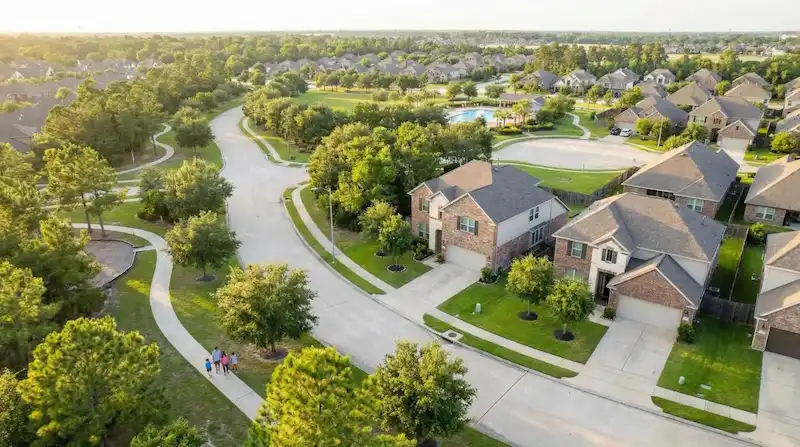
Katy is located west of Houston and includes an incorporated city as well as a much larger surrounding area commonly identified by Katy mailing addresses. Its residential options range from established subdivisions to newer developments with detached houses, townhomes, and shared neighborhood amenities. Buyers interested in larger floor plans or additional outdoor space may find a variety of properties to compare.
One of Katy’s attractions is the availability of shopping, healthcare services, restaurants, and recreational destinations throughout the broader area. Certain developments include pools, playgrounds, trails, and community facilities, although access and maintenance responsibilities depend on the specific subdivision and homeowners association.
Education is a consideration for many buyers researching Katy, but the mailing address alone should never be used to determine school assignments. Different parts of the broader area may fall under different school district boundaries, and attendance zones can change. Buyers should confirm campus assignments directly with the responsible district.
Katy is worth comparing with other areas of Houston to live when buyers prioritize suburban housing and west Houston accessibility. Those who commute toward Downtown, the Texas Medical Center, or northern Houston should test routes during their actual travel hours. Transportation costs, applicable tolls, property taxes, insurance, and association fees should be included when comparing homes.
2. Sugar Land
Sugar Land is an incorporated city southwest of Houston with established subdivisions, planned residential developments, commercial districts, and recreational facilities. Housing options include detached homes, townhomes, and properties with different architectural styles, lot sizes, and maintenance requirements.
Sugar Land Town Square is one of the city’s recognizable destinations for shopping, dining, and public activities. The surrounding area also contains parks, trails, recreational facilities, and local services, which may be convenient for residents who prefer having multiple everyday destinations within the same suburban area.
Property costs can differ considerably between subdivisions. Larger homes, properties in established communities, and homes closer to specific commercial amenities may have different purchase prices and maintenance needs. Buyers should review current listings along with property taxes, insurance estimates, and any homeowners association requirements.
Sugar Land is among the areas of Houston to live worth investigating for households that regularly travel toward southwest Houston or prefer a suburban setting. However, commuting to other parts of the metropolitan region may take considerably longer. School assignments, insurance requirements, and transportation routes should be checked using the exact property address.
3. The Woodlands
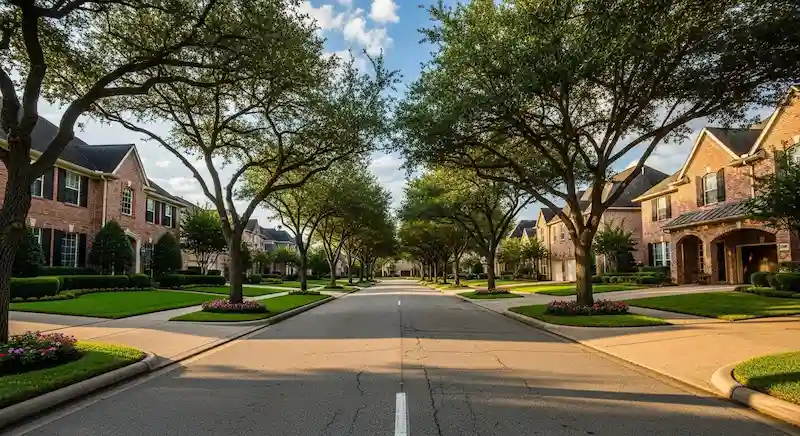
The Woodlands is a master-planned community north of Houston, recognized for its residential villages, wooded surroundings, parks, and network of trails. Rather than operating as one uniform neighborhood, it contains multiple residential areas with different home styles, commercial access, and community facilities.
Housing options include detached houses, townhomes, and properties near local shopping and entertainment destinations. Buyers may encounter substantial variation in lot size, property age, landscaping, and upkeep. Comparing homes across different villages can help identify the combination of space, location, and maintenance that best fits their preferences.
Outdoor recreation is a distinctive feature of The Woodlands. Its trails, green spaces, and community amenities offer options for walking, cycling, and recreational activities. However, buyers should verify the distance from each property to the facilities they intend to use, as well as any restrictions or fees associated with specific amenities.
When comparing the best areas of Houston to live, The Woodlands may be especially relevant to buyers whose daily activities take place in northern Greater Houston. Commuting to central or southern Houston requires a separate assessment. Property taxes, school assignments, insurance, and applicable community fees should also be evaluated for each address.
4. Cypress
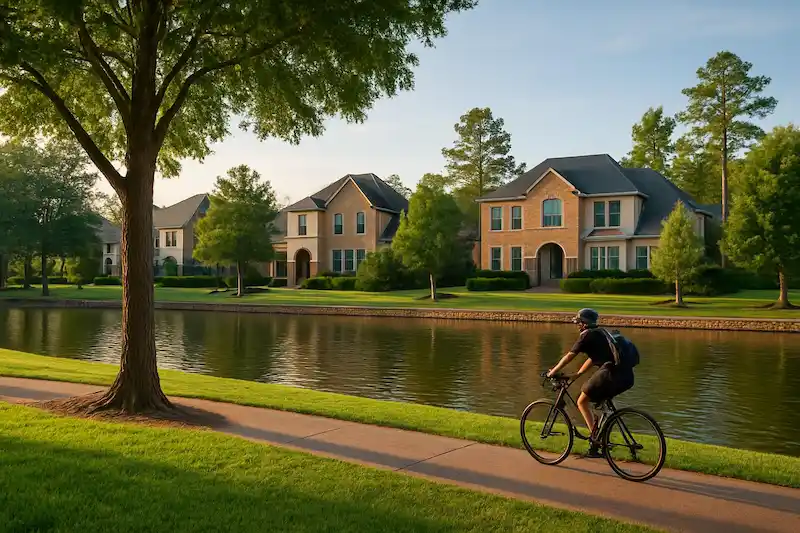
Cypress is a broad residential area northwest of Houston, largely located in unincorporated Harris County. It contains numerous subdivisions, planned communities, shopping destinations, and residential developments with different levels of amenities and access to major roads.
Buyers can explore newer detached homes, established houses, townhomes, and properties with a variety of lot sizes. Some planned developments include community pools, trails, playgrounds, and recreational spaces, while other subdivisions focus more on private residential properties. It is important to check which amenities belong to a particular development and whether their use involves additional costs.
Because Cypress covers a substantial geographic area, two homes with the same general location label may have very different commuting requirements. Proximity to U.S. Highway 290, the Grand Parkway, or other connecting roads can influence access to workplaces and everyday services. Buyers should calculate travel times from individual addresses rather than rely on the community name alone.
Cypress is one of the areas of Houston to live that may interest buyers comparing new construction with established suburban homes. Before purchasing, confirm school assignments, tax jurisdictions, homeowners association rules, and any applicable municipal utility district charges. These details can meaningfully affect the total cost of ownership.
5. Pearland
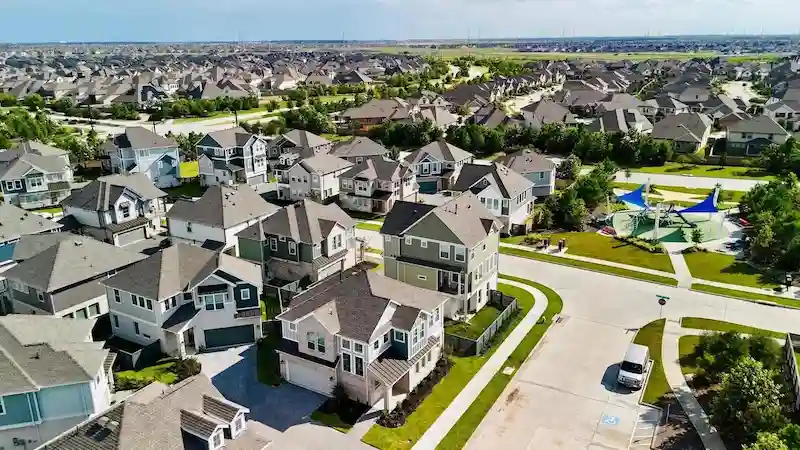
Pearland is an incorporated city south of Houston that includes established neighborhoods, newer residential developments, parks, shopping areas, and healthcare services. Its location may be useful for buyers who frequently travel toward southern Houston, depending on their workplace and preferred routes.
The housing market includes detached houses in planned subdivisions, properties in older residential areas, and a range of home sizes. Buyers should compare floor plans, construction age, energy efficiency, and maintenance needs, especially when evaluating properties built in different development periods.
Pearland has recreational amenities and everyday services that can help residents organize activities closer to home. Still, access to parks, schools, childcare, and shopping varies by subdivision. Buyers should map their regular destinations and consider how much time they would spend driving during a typical week.
Pearland deserves consideration among the best areas of Houston to live for buyers who want to compare southern suburban options. Commute convenience, available inventory, school assignments, and total monthly housing expenses should guide the decision rather than broad assumptions about the city as a whole.

6. Memorial
Memorial is an established west Houston area with residential neighborhoods, mature landscaping in many locations, shopping destinations, and access to major transportation corridors. The name is also used broadly in local real estate descriptions, so buyers should confirm the boundaries of the specific neighborhood they are researching.
Housing can include older detached homes, renovated properties, and newer construction on established lots. Architectural styles, lot sizes, home conditions, and purchase prices vary significantly. Buyers considering an older home should review the roof, foundation, plumbing, electrical systems, and heating and cooling equipment as part of the inspection process.
West Houston provides access to various commercial areas and recreational destinations. Depending on the property’s location, residents may have practical connections to employment centers and outdoor amenities. However, Memorial Park is not within walking distance of every neighborhood described as Memorial, making address-specific travel checks important.
Among the areas of Houston to live, Memorial may be relevant to buyers comparing established homes with alternatives farther west. Property taxes, insurance, school attendance boundaries, potential renovation expenses, and peak-hour commuting conditions should all be assessed before deciding whether the location fits the available budget.

7. Clear Lake
Clear Lake is a well-known area in southeastern Greater Houston, closely associated with the region’s aerospace industry and Johnson Space Center. The broader Clear Lake area includes residential neighborhoods, commercial centers, recreational spaces, and nearby waterfront destinations.
Buyers can find detached houses, townhomes, and properties constructed during different periods. Some neighborhoods provide shared amenities, while others offer established residential streets with varying lot sizes and home designs. The choice between these options depends on maintenance preferences, property condition, and proximity to everyday services.
Access to recreational destinations and employment centers in southeastern Houston may make Clear Lake practical for certain buyers. Nevertheless, commute requirements can be very different for households traveling toward Downtown, west Houston, or the northern suburbs. Comparing actual routes is more useful than relying exclusively on distance estimates.
Clear Lake is among the areas of Houston to live where a property-specific flood and drainage review is particularly important. Buyers should consult official flood maps, investigate available property history, review insurance requirements, and arrange professional inspections. The exact address matters more than general assumptions about proximity to water.

8. Friendswood
Friendswood is an incorporated city south of Houston that includes established residential neighborhoods, newer developments, local parks, and commercial services. It offers several housing configurations for buyers comparing different property sizes, layouts, and maintenance responsibilities.
Detached houses with yards are common in portions of Friendswood, although lot dimensions, construction periods, and community rules vary. Some properties may offer larger outdoor areas, while others provide more convenient access to commercial destinations and major roads. Comparing subdivisions individually helps buyers identify meaningful differences.
Families researching Friendswood should examine school attendance boundaries at the exact address. Municipal boundaries, postal addresses, and school district boundaries are not necessarily identical. Buyers should also evaluate traffic conditions, neighborhood infrastructure, nearby healthcare services, and recreational options based on their own requirements.
Friendswood can be included when comparing suburban areas of Houston to live, particularly for buyers focused on the southern or southeastern metropolitan region. Flood history, drainage, property taxes, insurance, and the total cost of maintaining a house should be reviewed before making a purchase.

9. West University Place
West University Place is an independent incorporated city located near central Houston. Its established residential streets and proximity to major Houston destinations make it an option for buyers who place a high value on geographic convenience and access to urban amenities.
The housing market includes established homes, renovated properties, and newer construction. Lot size, building condition, architectural design, and property value can vary. Buyers should carefully compare the amount of living space they receive, the property’s age, and the total expense of ownership rather than focusing only on location.
Parks, local services, and connections to nearby Houston destinations contribute to the area’s residential appeal. However, buyers should not assume that every home is equally convenient for walking or that a shorter geographic distance guarantees a predictable commute. Reviewing specific routes and destinations remains necessary.
West University Place belongs on a list of areas of Houston to live for buyers considering central locations and established residential environments. Its housing costs can be a significant limiting factor, so comparing current listings, taxes, insurance, and maintenance requirements is essential. School attendance should also be confirmed directly with the relevant district.
10. Spring Branch
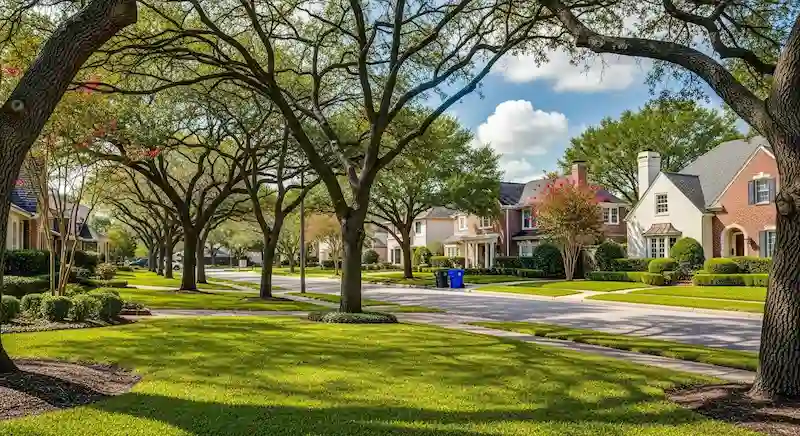
Spring Branch is a west-central Houston area containing established neighborhoods, commercial developments, and a broad mix of residential properties. Its location can provide access to employment and shopping destinations in western and central Houston, although convenience varies across the area.
Buyers may encounter mid-century houses, renovated detached homes, newer residential construction, and townhomes. The variation in property age can create differences in maintenance expenses, insulation, floor plans, and major building systems. A renovated appearance should not replace a thorough assessment of the property’s actual condition.
Spring Branch also offers different residential settings within a relatively broad geographic area. Some neighborhoods contain established streets and detached homes, while other locations are closer to busy commercial corridors. Buyers should compare traffic, parking, road conditions, nearby facilities, and access to the destinations they use most frequently.
When researching the best areas of Houston to live, Spring Branch may be an option for buyers who prefer to remain within Houston rather than move into a more distant suburb. School boundaries, insurance costs, flood risk, construction quality, and monthly ownership expenses should be verified before comparing individual properties.
Best areas of Houston to live near good schools
The best areas of Houston to live near schools depend on the educational programs a household needs and the specific attendance boundaries associated with a property. Katy, Sugar Land, Cypress, Pearland, The Woodlands, and established Houston neighborhoods offer different educational options, but no single location is the right choice for every student.
Public school assignments should be verified through the relevant school district. The Texas Education Agency provides district-level information, but individual districts determine attendance zones and enrollment assignments. Parents should review the most current information before choosing a property based on access to a particular school.
Educational research should extend beyond rankings. Available academic programs, special education services, language support, extracurricular activities, transportation arrangements, and enrollment procedures can all affect whether a school meets a student’s needs. Families considering private or charter schools should also verify admission requirements, tuition when applicable, and transportation options.
The most useful comparison combines educational access with housing costs and travel requirements. A home near a preferred school may have different property taxes, maintenance expenses, or commute times than another available option. Evaluating these factors together helps buyers make a decision based on their actual requirements.
Affordable areas in Houston for families
When comparing affordable areas of Houston to live, buyers should examine properties in different parts of Cypress, Katy, Pearland, Spring Branch, and the wider metropolitan region rather than assuming one entire community is inexpensive. Each location includes homes at different price points, and affordability depends on inventory, property condition, financing, and total ownership expenses.
Houston housing data also provides useful market context. According to the Houston Association of Realtors’ September 2026 report, the median sale price of a single-family home across Greater Houston was $325,000. This is a regional benchmark, not the typical price of a home in every neighborhood or a guarantee that a property will be available at that amount. har.com
The purchase price is only part of the calculation. Property taxes, mortgage interest, insurance, homeowners association fees, utilities, and potential repairs can substantially influence monthly expenses. Buyers considering newer developments should also check whether municipal utility district taxes or other community-related charges apply to a particular property.
A practical way to compare affordability is to search for homes within a defined budget and evaluate the total monthly cost alongside location and property condition. You can explore Homes for Sale in Houston to review available properties and begin comparing housing options that match your priorities.
Best areas in Houston for parks and outdoor activities
Outdoor recreation is another factor that distinguishes the best areas of Houston to live. The Woodlands offers an extensive network of trails and green spaces, while residential developments in Katy, Cypress, Sugar Land, and Pearland provide varying combinations of playgrounds, neighborhood parks, sports facilities, and shared outdoor amenities.
Within Houston, Memorial Park is a major recreational destination with opportunities for walking, running, cycling, and other outdoor activities. Other parks throughout the city serve different recreational needs, from children’s play areas to open spaces and organized sports facilities. Buyers should check which parks are convenient to the particular neighborhoods they are considering.
Houston’s hot and humid summers can also influence how frequently outdoor facilities are used. Shaded playgrounds, covered seating areas, water access, indoor recreational facilities, and swimming pools may be especially useful during warmer months. Families should verify available amenities and any access restrictions before including them in their housing priorities.
When comparing locations, consider how often you realistically plan to use nearby facilities. A park within walking distance may be more convenient than a larger recreational area requiring a long drive. Looking at travel routes, opening hours, maintenance, and accessibility can provide a clearer picture of the everyday value of each amenity.
You might also be interested in: The best family activities in Houston

How to choose the right Houston neighborhood for your family
After exploring different communities, the next step is to compare them using your family’s actual needs. It is easy to be influenced by attractive property photos or a neighborhood’s reputation, but the right decision should reflect how you will live there from day to day. A beautiful home may not be the best fit if the commute is difficult, the monthly costs are too high, or the surrounding area does not support your family’s routine.
Start by identifying your main priorities. For one family, access to a particular school may come first. Another may need to remain close to a workplace, while a household with younger children may value playgrounds, childcare, and quiet residential streets. Write down the features you consider essential and separate them from the preferences that would be nice to have. This makes it easier to compare options without expecting one property to meet every possible requirement.
Establish a realistic housing budget
Determine how much you can comfortably spend each month without relying solely on the maximum mortgage amount for which you may qualify. A lender can help estimate financing options, but buyers should also consider their existing financial commitments and future expenses.
Include principal and interest, property taxes, homeowners insurance, possible flood insurance, homeowners association fees, maintenance, and utilities. For properties in newer residential developments, verify whether additional local taxing districts or community assessments apply.
A useful comparison should also account for initial expenses such as inspections, closing costs, moving costs, and potential repairs. Reviewing these figures before scheduling multiple property tours can help buyers concentrate on homes that fit their financial situation.
Compare commute times at different times of day
Commute times can be one of the most important differences between Houston neighborhoods and surrounding suburbs. A property that appears conveniently located on a map may require a longer journey during weekday traffic.
Use navigation tools to estimate travel times at the hours you expect to drive. Compare routes to workplaces, schools, medical facilities, and other frequent destinations, paying attention to toll roads, parking requirements, and alternative routes.
Buyers who work remotely should also consider how often they need to visit an office or meet clients. Those with several regular destinations may benefit from comparing their complete weekly travel schedule instead of focusing on one commute.
Research schools and essential services
School research should begin with the exact property address. Confirm the responsible district and school assignments directly, and check whether any enrollment procedures, transportation policies, or special programs affect your decision.
Next, map the essential services used regularly, such as grocery stores, healthcare providers, pharmacies, childcare facilities, and recreational centers. The availability of these services within a broader community does not necessarily mean they are close to every home.
Consider accessibility as well as distance. A destination that is only a few miles away may still require a complicated route, while another farther away may be easier to reach. Evaluating actual travel arrangements can improve the accuracy of your comparison.
Visit neighborhoods in person
Property photographs and online listings provide useful information, but they cannot fully communicate local traffic, noise, street conditions, or the surrounding environment. Whenever possible, visit the neighborhoods you are researching before committing to a purchase.
Explore the area at different times, including weekday commuting hours and weekends. Observe parking, pedestrian routes, traffic signals, nearby construction, and access to businesses or public facilities.
For buyers relocating from outside Houston, live video tours can supplement in-person visits. Request views of surrounding streets and nearby services, and combine those observations with official information and independent property inspections.
Consider your family’s plans for the future
A home should meet your current needs, but it is also useful to consider how your circumstances may change. If your children are young, you may want to think about school transitions, access to activities, and whether you will need additional bedrooms. If you work remotely, you may need a dedicated office or a quieter room.
Other families may be planning to welcome another child, care for an older relative, or change workplaces in the next few years. You do not need to predict everything, but considering likely changes can help you choose a property that remains practical for longer.
Think about how much maintenance you want to manage, too. A large yard or older house may offer advantages but require more time and money to maintain. A townhouse or apartment may reduce some maintenance responsibilities, although it can involve association fees or shared rules. The best option is the one that fits your preferred lifestyle, not simply the one with the most space.
Review property-specific risks and costs
Before making a final decision, research the individual property as carefully as the neighborhood. In the Houston region, flood risk, drainage, insurance, and property condition are important considerations. Conditions can vary within a small area, so do not assume that all homes in the same community have the same risk profile.
Buyers should arrange appropriate inspections and review relevant records. Ask about the age and condition of major systems, roof, plumbing, and heating and cooling equipment. Review property taxes and insurance estimates, and understand any homeowners association rules or fees. Renters should review lease terms, maintenance responsibilities, utility arrangements, parking, and procedures for reporting repairs.
For properties in areas where flooding may be a concern, consult official flood maps, review available property history, and speak with an appropriate insurance professional. Asking these questions before committing can help you avoid unexpected costs and make a decision based on more complete information.
Compare your final options side by side
Once you have narrowed your search to a few locations, create a simple comparison. Include the estimated monthly housing cost, commute time, school options, access to parks, nearby services, and the features you consider essential. You can also rate each location according to how well it matches your family’s priorities.
Avoid choosing based on one attractive feature alone. A property may have a spacious yard but require a difficult commute, while another may have less outdoor space but offer easier access to school and work. Comparing the full picture can help you understand which compromises are acceptable and which ones would make daily life more difficult.
If you are uncertain, consider renting in the area before purchasing, when practical. Spending time in a neighborhood can help you understand its traffic, community atmosphere, and convenience beyond what a short visit can reveal. With careful research and realistic expectations, you can make a more confident decision about where your family wants to settle.
How do housing costs compare across Houston neighborhoods?
Housing expenses differ across Houston and the surrounding metropolitan area because of property size, location, construction age, demand, and the characteristics of individual developments. Buyers should avoid assuming that every property within a named community belongs to the same price category.
As a reference, the Houston Association of Realtors reported a Greater Houston median single-family sale price of $325,000 in September 2026, with an average price of $421,311. The difference between these figures highlights why buyers should understand the measure being used rather than treat an average or median as the expected price of a particular home.
For a meaningful comparison of the best areas of Houston to live, examine recent comparable sales and active listings within each specific neighborhood. A detached house in one subdivision may not be directly comparable with a townhouse, condominium, or recently built property in another location.
Buyers should also distinguish the advertised price from the total estimated cost of ownership. Insurance, taxes, association fees, maintenance, and transportation can alter which property represents the most practical choice. For pricing decisions, use recent local market data and property-specific estimates rather than relying on broad regional figures.
A place to call home: finding the right fit for your family
Finding the right home is about more than choosing a popular neighborhood or a property with enough bedrooms. The best decision is one that supports your family’s daily routine, fits your budget, and offers access to the services and activities that matter to you. Houston and its surrounding communities provide many different possibilities, from established city neighborhoods to suburban areas with parks and residential developments. Take time to compare your options, verify important details, and visit whenever possible. With a clear idea of your priorities, you can move forward with greater confidence and find a place where your family can feel at home.