Houston, Texas
Call · (346) 622-9580
Houston, Texas
Call · (346) 622-9580



Choosing plants for your home is a simple way to make each room feel more welcoming, comfortable, and connected to nature. From small plants that fit on a desk to larger varieties that become the center of attention in a living room, there are options for different spaces and lifestyles. The best indoor plants for home decoration depend on the available light, the time you can dedicate to their care, and the style you want to create. In this guide, you will learn how to choose, care for, and decorate with indoor plants.
What are indoor plants?
Indoor plants are plants that can grow inside homes, apartments, offices, and other enclosed spaces when they receive the conditions they need to remain healthy. Many varieties adapt well to indoor environments because they tolerate indirect sunlight, moderate temperatures, and the humidity levels commonly found inside buildings. Some are grown mainly for their attractive leaves, while others stand out for their flowers, shapes, or ability to complement different decorating styles.
Unlike outdoor plants that may need direct sunlight for several hours a day, many indoor varieties prefer bright, indirect light. This means they can often grow near a window without being exposed to strong sunlight throughout the day. However, not every plant has the same requirements. Some tolerate low-light areas, while others need brighter spaces to develop properly. Understanding these differences helps you select plants that suit your home instead of choosing them based only on their appearance.
Indoor plants can also vary considerably in size, shape, and growth habits. Some, such as pothos, produce long stems that can hang from shelves or baskets. Others, including the rubber plant and monstera, have broad leaves that create a stronger visual presence. Smaller varieties may fit comfortably on windowsills, desks, and bedside tables, making them practical choices for apartments or rooms with limited space.
Adding plants to your home does not require a large garden or advanced gardening knowledge. A few carefully selected varieties can be enough to bring color and texture into a room. The key is to understand what each plant needs and find a suitable place for it. With appropriate light, watering, and occasional maintenance, indoor plants can become a lasting part of your home decoration.
What are the best indoor plants?
The best indoor plants are those that suit your space, lighting conditions, daily routine, and decorating preferences. A plant that thrives in a bright living room may struggle in a dark hallway, while a variety that requires frequent watering may not be ideal for someone who travels often. Instead of choosing a plant simply because it looks attractive, consider how well its needs match the environment where you plan to place it.
For many households, plants such as snake plants, pothos, ZZ plants, and philodendrons are practical options because several of these varieties can adapt to common indoor conditions. Their different shapes also make them easy to incorporate into a range of interiors. A snake plant provides an upright, structured appearance, while pothos creates a softer look with its trailing stems. A ZZ plant offers glossy leaves, and a monstera can bring a bold, tropical touch to a spacious room.
The amount of natural light available should be one of your first considerations. Observe whether the room receives direct sunlight, bright indirect light, or only limited daylight. Also, think about temperature changes, air circulation, and the amount of space available for the plant to grow. These factors can affect how well a variety adapts to its new location.
Your daily routine matters, too. If you prefer low-maintenance decoration, consider varieties that can tolerate occasional delays between watering. If you enjoy gardening and have time to check your plants regularly, you may prefer species with more specific care requirements. In either case, choosing a suitable plant from the beginning can make maintenance easier and help you enjoy your indoor garden for longer.
Finally, consider the appearance you want to achieve. Plants with large leaves can create a focal point, while smaller plants work well in groups. Varieties with trailing stems can soften shelves and furniture, and upright plants can add height to empty corners. Combining different shapes and sizes can create a balanced arrangement without making the room feel crowded.
Top 10 indoor house plants for a beautiful home
Choosing from the many available houseplants can feel overwhelming, especially when each variety has different requirements and visual characteristics. A helpful starting point is to focus on plants that offer an attractive appearance and can adapt to the conditions you have at home. The following ten options include plants with different leaf shapes, sizes, and care needs, making it easier to find something suitable for your space.
1. Monstera deliciosa
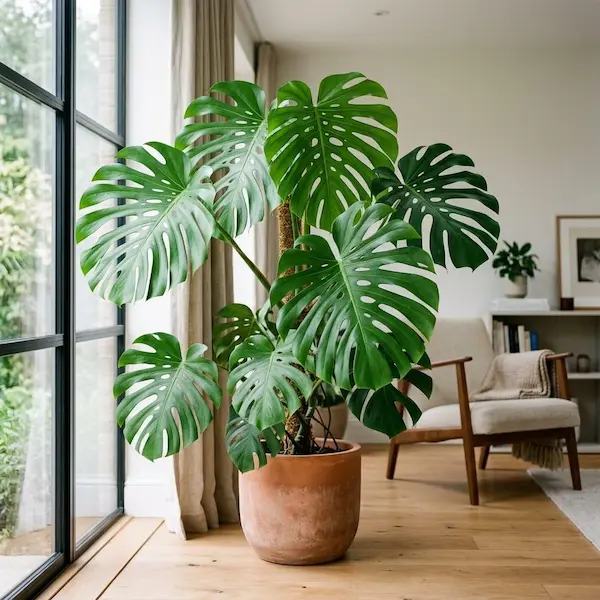
Monstera deliciosa is a popular indoor plant known for its large green leaves, which develop distinctive splits and natural openings as the plant matures. Its tropical appearance makes it an attractive choice for living rooms, spacious bedrooms, and other areas where you want to create a noticeable decorative feature. The leaves add texture and visual interest, even when the rest of the room has a simple color palette.
This plant generally grows best in bright, indirect light. A position near a window with filtered sunlight can provide suitable conditions, although it may also tolerate moderate light. Avoid placing it where strong afternoon sunlight consistently reaches the leaves, as this can cause scorching. Monstera prefers a well-draining potting mix and should be watered when the upper part of the soil has begun to dry. Watering needs will vary depending on the temperature, pot size, and season.
Because monstera can grow quite large, it is worth considering its mature size before choosing a location. Its broad leaves may need room to spread, and a support pole can help guide its growth upward. Wiping the leaves occasionally with a soft, damp cloth helps remove dust and keeps their natural appearance visible. If you have pets, keep in mind that monstera is toxic if chewed, so it should be placed somewhere animals cannot reach.
2. Snake plant
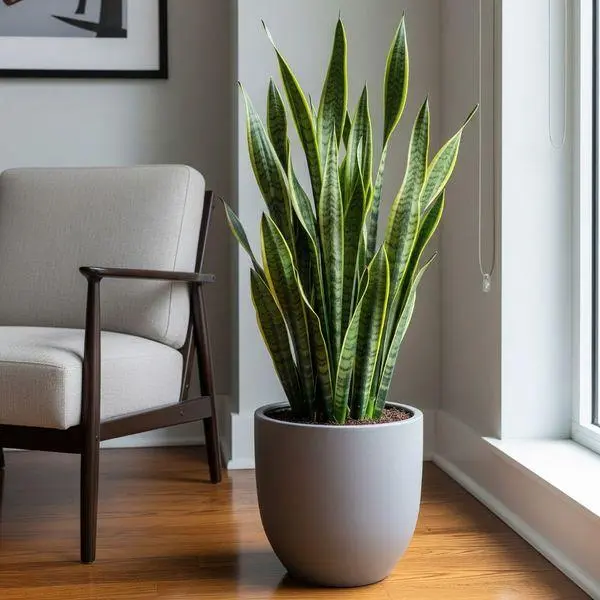
The snake plant, also known as Dracaena trifasciata, is recognized for its tall, upright leaves and architectural shape. Depending on the variety, its foliage may feature dark green patterns, pale edges, or yellow borders. This vertical growth makes it especially useful in rooms where floor space is limited but a decorative accent is still needed. It can fit beside a sofa, near an entryway, or in an unused corner.
One of its main advantages is that it tolerates a range of indoor lighting conditions, from bright indirect light to relatively low light. However, growth is usually stronger when it receives adequate light. It also stores water in its thick leaves, allowing it to tolerate dry periods better than many moisture-loving houseplants. For this reason, it is often suitable for people who prefer a simple care routine or are still learning basic gardening skills.
The most important part of caring for a snake plant is avoiding excessive watering. Allow the soil to dry out thoroughly before watering again, and use a pot with drainage holes. Water that remains around the roots can cause them to rot, especially in cooler conditions or heavy soil. Its upright shape also makes it easy to combine with rounded pots, wooden furniture, and minimalist decorations. Snake plants are toxic if ingested by pets, so placement should be considered carefully in homes with cats or dogs.
3. Pothos
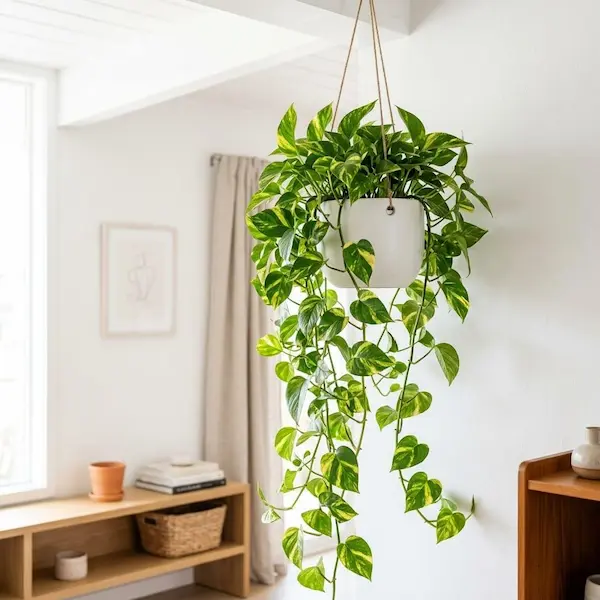
Pothos is a versatile plant with heart-shaped leaves and flexible stems that can trail down from shelves, hanging baskets, or tall furniture. Depending on the variety, its foliage may be solid green or include yellow, cream, or pale green patterns. This makes it easy to coordinate with different interior styles, from relaxed and natural spaces to contemporary apartments with simple furniture.
Pothos typically grows well in bright, indirect light, although many varieties tolerate moderate or lower light. Variegated types may need brighter conditions to maintain their leaf patterns. The soil should be allowed to dry slightly between waterings rather than remaining constantly wet. If the leaves begin to droop, check the soil before adding water because drooping can have several causes, including both dryness and overwatering.
One of the reasons people enjoy pothos is its flexibility in decoration. You can place it on a bookcase, let its stems fall from a wall shelf, or train them along a support. Regular pruning helps control its size and encourages a fuller appearance. Cuttings can often be propagated in water or an appropriate growing medium, allowing you to create additional plants from an established one. Pothos is toxic if chewed, so keep it out of reach of pets and young children who might put leaves in their mouths.
4. Peace lily
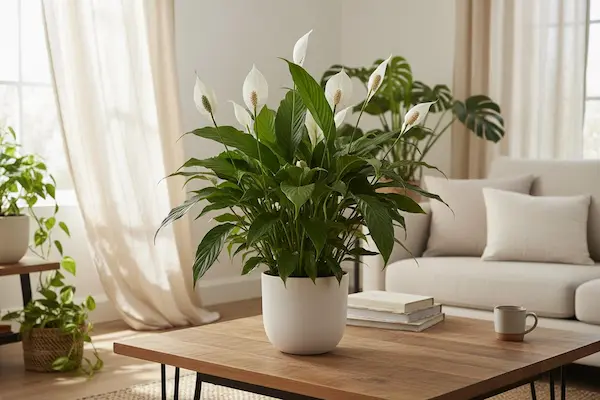
The peace lily, or Spathiphyllum, is valued for its glossy green foliage and elegant white flower-like structures. Its appearance works well in bedrooms, living rooms, reading corners, and offices where a calm decorative touch is desired. The white blooms stand out against the leaves and can complement neutral furniture, light-colored walls, and natural materials such as wood or linen.
Peace lilies generally prefer bright, indirect light, but they can also grow in moderate light. Very low light may reduce flowering, so a darker room may support its foliage without producing many blooms. The soil should remain lightly moist but not waterlogged. Check the upper layer before watering, and empty excess water from the saucer when necessary. The plant may droop when it needs water, but it is better to avoid relying on wilting as a regular reminder because repeated stress is not ideal for healthy growth.
Humidity can help peace lilies remain in good condition, especially in dry indoor environments. Removing yellow or damaged leaves keeps the plant looking tidy, while wiping the foliage helps maintain its shine. It is important to remember that peace lilies are toxic to cats and dogs if chewed. If you have pets, choose a safer alternative or place the plant in a location that they cannot access.
5. Spider plant
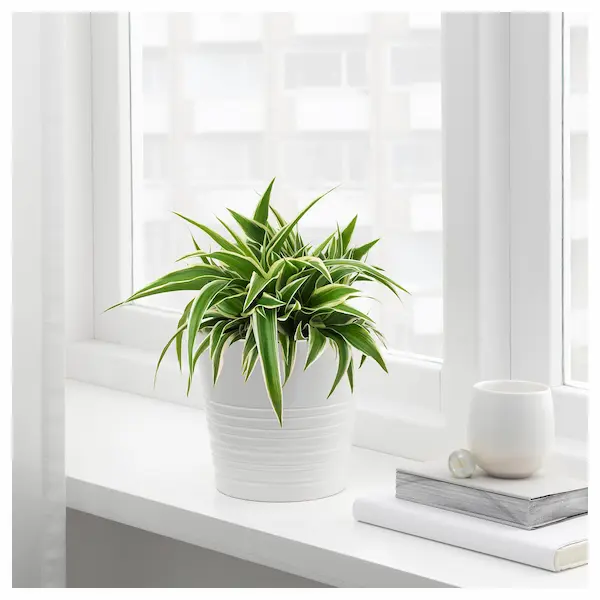
The spider plant, scientifically known as Chlorophytum comosum, has long, narrow leaves that curve outward from the center of the plant. Many varieties feature green leaves with white or cream stripes, creating a light and fresh appearance. Mature plants may also produce small plantlets on long stems, adding movement and making the plant particularly attractive in hanging containers or on elevated shelves.
Spider plants usually grow well in bright, indirect light and can tolerate some moderate shade. Strong direct sunlight may damage the leaves, especially when the plant has not been gradually adapted to it. Use a well-draining potting mix and water when the surface begins to dry. Although spider plants appreciate consistent care, they generally do not need complicated maintenance. Their appearance and adaptability make them useful for living rooms, kitchens, bedrooms, and home offices.
As the plant matures, its hanging plantlets can be used to grow new plants. You can leave them attached for a fuller display or separate them once they have developed enough roots. Brown leaf tips may appear because of irregular watering, dry air, fertilizer buildup, or minerals in the water. Trimming the affected tips can improve its appearance, but it is also worth reviewing the growing conditions to prevent the problem from returning. Spider plants are generally considered non-toxic to cats and dogs, making them a more suitable choice for many pet-owning households.
6. Rubber plant
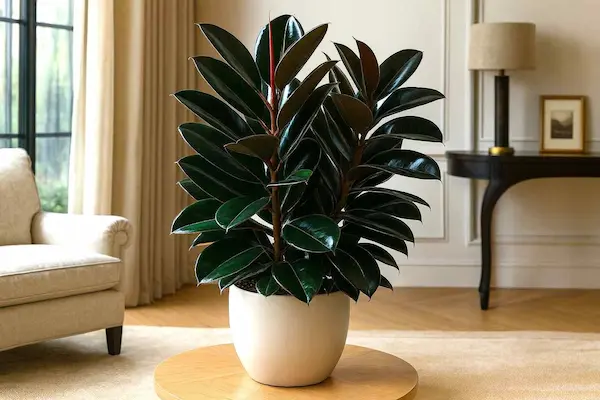
The rubber plant, or Ficus elastica, is an excellent option for people who want a leafy plant with a strong visual presence. Its thick, glossy leaves may be deep green, burgundy, or variegated, depending on the variety. Because it can grow into a tall indoor specimen, it works well beside furniture, near a bright window, or in an empty corner that needs more height and texture.
Rubber plants generally prefer bright, indirect light and consistent growing conditions. They need a well-draining potting mix and should be watered when the upper portion of the soil has dried. Avoid leaving the roots in standing water, as this can cause root problems. Turning the pot occasionally can help the plant receive light more evenly, particularly when it grows near a window and begins leaning in one direction.
Dust can accumulate on the large leaves, making them appear dull. Wiping them gently with a damp cloth helps keep the foliage clean and allows you to check for pests at the same time. As the plant grows, you may need to prune it or move it into a larger container, depending on the available space. Rubber plants can be toxic to pets, and their milky sap may irritate skin, so handle cut stems carefully and keep the plant away from animals that may chew its leaves.
7. ZZ plant
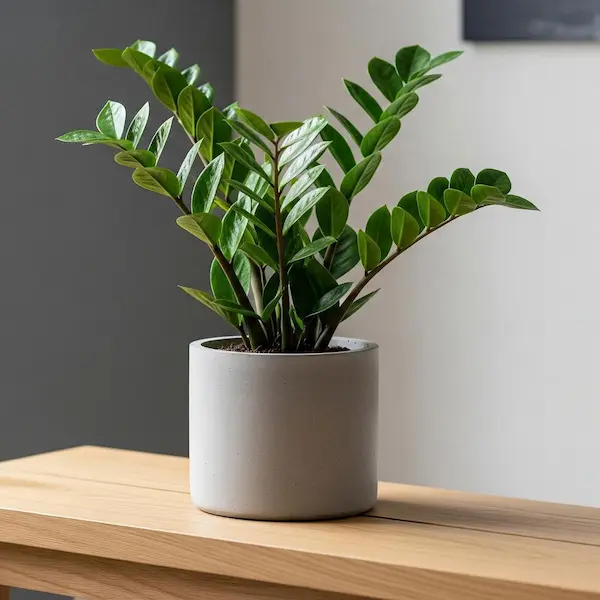
The ZZ plant, or Zamioculcas zamiifolia, is known for its thick stems and smooth, glossy leaves. Its structured shape gives it a neat appearance that fits well in contemporary interiors, workspaces, bedrooms, and areas where a compact decorative plant is preferred. The foliage usually has a rich green color, while its upright stems help create visual height without requiring a large amount of floor space.
One of its most useful characteristics is its ability to tolerate lower-light conditions. It can also manage periods of dryness because its underground rhizomes store water. However, tolerance does not mean that it can thrive indefinitely without light or care. Growth is often slower in dim rooms, while brighter indirect light can encourage stronger development. Allow the potting mix to dry well between waterings and use a container with good drainage.
The ZZ plant is a practical choice for people who want greenery without a demanding watering schedule. It usually needs little pruning, although damaged leaves can be removed when necessary. Excessive watering is one of the most common problems, particularly when the plant is kept in a cool room or a container that retains too much moisture. The plant is toxic if ingested, so it should be kept away from pets and children who might chew its leaves or stems.
8. Aloe vera
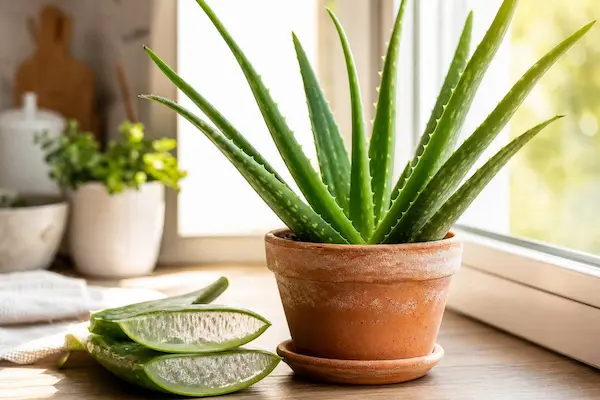
Aloe vera is a succulent with thick, pointed leaves that store water. Its sculptural shape makes it a suitable decorative option for kitchens, bright windowsills, and small tables that receive enough natural light. The plant has a clean, simple appearance that works well with natural materials, ceramic pots, and minimalist interiors. Because it generally grows in a compact form, it can be useful when there is not much room for larger houseplants.
Aloe vera needs bright light and often performs best near a sunny window. If the available light is limited, its growth may become weak or stretched. Unlike plants that prefer consistently moist soil, aloe needs a well-draining mix designed for succulents and should be watered only after the soil has dried thoroughly. A pot with drainage holes is particularly important because water that remains around the roots can cause rot.
Although aloe vera is associated with skin-care products, the plant should not be treated as a substitute for medical advice or used without understanding its safety considerations. The plant can be toxic to cats and dogs if ingested. When choosing a location, make sure it receives sufficient light without being exposed suddenly to intense sunlight that could damage its leaves. With suitable conditions and careful watering, aloe can remain an attractive part of a small indoor plant collection.
9. Philodendron
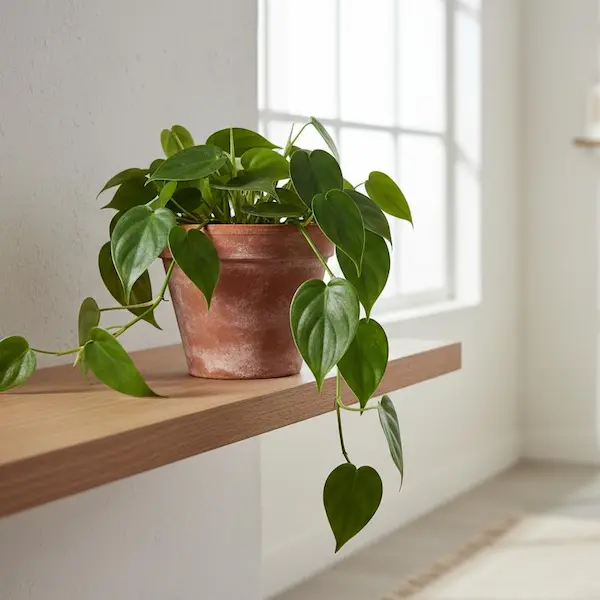
Philodendrons include many varieties, from climbing plants with small heart-shaped leaves to larger species with broad, deeply divided foliage. Their variety makes them adaptable to different decorating preferences. A trailing philodendron can soften the edges of shelves and cabinets, while a larger upright type can provide a leafy accent in a room with enough space.
Most common indoor philodendrons grow well in bright, indirect light, although their exact requirements vary by species. A well-draining potting mix and moderate watering usually support healthy growth. Let the upper part of the soil dry slightly before watering again, and avoid leaving the plant in a water-filled saucer. Climbing varieties may benefit from a moss pole or another suitable support, while trailing types can be allowed to hang naturally.
Regular pruning helps maintain the desired shape and can encourage fuller growth. If stems become too long, cuttings may be used to propagate new plants, depending on the variety. It is important to identify the plant correctly before choosing its care routine because philodendron species do not all grow in the same way. Many common philodendrons are toxic if ingested, so they should be kept out of reach of pets and small children.
10. Areca palm
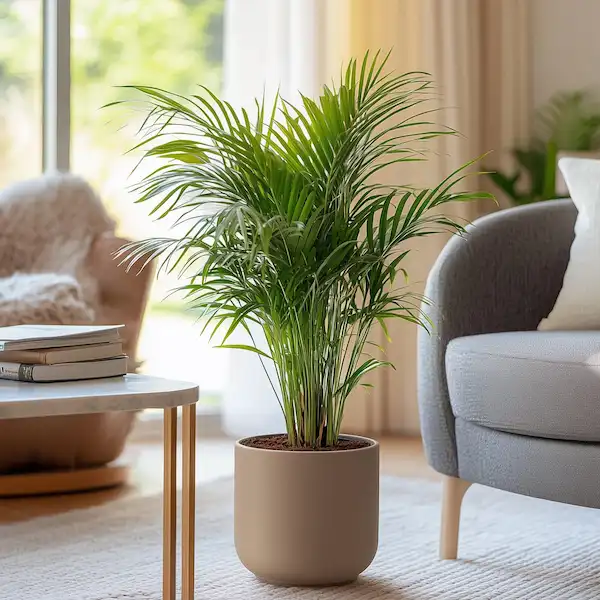
The areca palm, also known as Dypsis lutescens, has long, arching fronds that create a light, tropical appearance. It can make a room feel more layered and visually interesting, especially when placed in a bright corner or beside furniture with simple lines. Because the plant can grow quite large, it is particularly suitable for living rooms, open-plan spaces, and interiors with enough height for its foliage to spread.
Areca palms generally prefer bright, indirect light and evenly moist but well-draining soil. They should not be left sitting in excess water, and the soil should not remain completely dry for long periods during active growth. These palms can appreciate moderate humidity, so very dry indoor conditions may lead to brown leaf tips. Removing damaged fronds and checking the leaves regularly helps maintain a tidy appearance.
Before buying an areca palm, consider its mature size and the space needed around its foliage. A small plant may look compact at first but can gradually become a substantial decorative feature. It is generally considered non-toxic to cats and dogs, which can make it an appealing option for homes with pets. With enough light, suitable watering, and room to grow, an areca palm can bring a soft, natural character to a living space.
Best indoor plants for low light
Rooms with limited natural light can still benefit from indoor plants, but choosing the right variety is essential. A bedroom with a small window, a hallway away from direct sunlight, or an office with filtered daylight may not provide the same conditions as a bright living room. Some plants tolerate these environments better than others, making them practical options for spaces where sunlight is limited. However, even shade-tolerant varieties need some light to survive and grow, so it is important to understand the conditions each plant requires before choosing one for your home.
Snake plants and ZZ plants are popular choices because they tolerate lower-light conditions and generally require less frequent watering than many other houseplants. Pothos is another option, as its trailing stems can add greenery to shelves and elevated surfaces, although its growth may slow in dim environments. Some philodendron varieties can also adapt to indirect light, depending on the species and the amount of daylight available. When choosing among these options, consider the size of the room, the distance from windows, and how much time you can dedicate to plant care.
It is important to distinguish between tolerating low light and growing well in darkness. A room that appears bright to a person may still provide limited light for a plant, especially when the window is far away or blocked by curtains, buildings, or trees. If the leaves begin turning yellow, the stems become unusually long, or the plant loses its usual color, consider whether it needs a brighter position. Watering should also be adjusted because plants in dim rooms often use less water and their soil may take longer to dry. With suitable placement and careful observation, you can introduce greenery into spaces that receive limited natural light.
How to choose indoor plants for different rooms
Each room in a home has different conditions, so the same plant may not work equally well everywhere. Living rooms often offer more floor space and access to windows, while bathrooms may have higher humidity but limited natural light. Bedrooms can benefit from compact varieties that fit on bedside tables, and kitchens may provide bright windowsills suitable for smaller plants. Choosing plants according to these differences makes it easier to create a coordinated appearance while providing suitable growing conditions. Before selecting a variety, consider the available light, temperature, humidity, and amount of space you can dedicate to it.
In the living room, larger plants such as monstera, rubber plants, and areca palms can create an attractive focal point. Place them where their leaves have enough room to grow without obstructing walkways or furniture. Bedrooms usually benefit from simple arrangements that do not occupy too much space, making snake plants, small ZZ plants, or trailing pothos practical options when the light conditions are appropriate. Kitchens can accommodate plants on windowsills, counters, or open shelves, depending on the available light and working space. For example, aloe vera may suit a sunny windowsill, while a spider plant can work in a position with indirect light. Keep pots away from heat sources and areas where they could interfere with food preparation.
Bathrooms and home offices require a little more attention because their conditions can vary considerably. A bathroom with a bright window may suit certain humidity-loving plants, but one without a window may need additional lighting to support healthy growth. In a home office, a compact ZZ plant or pothos can introduce greenery without taking up too much workspace or obstructing screens and documents. It is also important to consider whether plants are safe for pets and young children who may come into contact with them. By matching each plant to the conditions of the room, you can create comfortable, attractive spaces without compromising its health.
Tips for keeping indoor plants healthy
Healthy indoor plants depend on consistent care that matches their individual requirements. Although some varieties tolerate occasional neglect, all plants need appropriate light, water, and a growing environment that supports their roots. Establishing a simple routine can help you identify problems early and prevent common mistakes. Rather than treating every plant the same way, learn to recognize the signs that indicate when a change in care may be necessary. Paying attention to the condition of the leaves, the moisture in the soil, and the plant’s growth can help you maintain a healthier indoor garden without making the process unnecessarily complicated.
Watering correctly is one of the most important aspects of plant care. Overwatering can cause root problems, particularly when the soil remains wet for too long. Before adding water, check the upper layer of the potting mix and consider the plant’s species, pot size, and environmental conditions. Some varieties prefer the soil to dry between waterings, while others need more consistent moisture. Light is equally important because it influences growth, leaf color, and the plant’s ability to maintain its shape. Place each variety where it receives the amount of light it needs, and move it gradually when necessary to avoid sudden changes that may damage the leaves. A container with drainage holes and a suitable growing mix can also help maintain healthy roots.
Regular observation makes it easier to detect pests, damaged leaves, and changes in growth before they become more serious problems. Gently clean dusty foliage with a damp cloth when appropriate, and inspect both sides of the leaves for insects, sticky residue, or unusual spots. Remove dead or damaged leaves with clean tools, taking care not to prune away too much healthy foliage. It is also important to consider seasonal changes, since plants may grow more slowly when daylight decreases and may need less water or fertilizer. To maintain a suitable care routine, check the soil before watering, use pots with adequate drainage, inspect leaves regularly, avoid placing plants near heating vents or cold drafts, and adjust watering and fertilizing habits as the seasons change.
You might also be interested in: 10 Interior Design Ideas for a Stylish and Comfortable Home
How to decorate your home with indoor plants
Decorating with plants is not simply about adding as many pots as possible. A well-planned arrangement considers scale, color, texture, and the way people move through a room. Plants can help fill empty corners, soften straight furniture lines, and introduce natural shapes into spaces dominated by hard surfaces. When placed thoughtfully, they can complement the existing decoration rather than compete with it. The key is to select varieties that suit both the appearance of your home and the growing conditions available, allowing the arrangement to remain attractive over time.
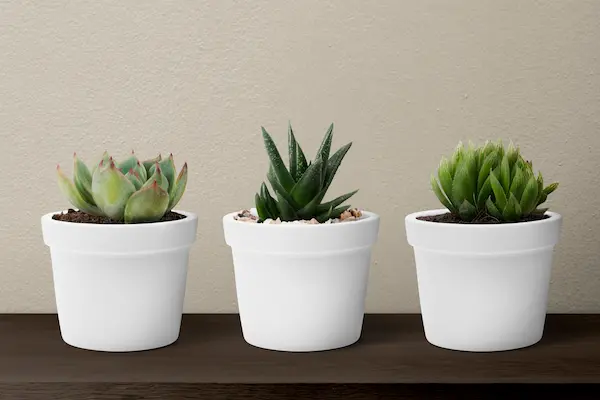
One useful approach is to choose a main plant for a prominent area. A large monstera, rubber plant, or areca palm can draw attention to an otherwise empty corner, while smaller plants can be arranged nearby to create balance. Different heights can make the display more interesting, such as placing a small plant on a side table, a medium-sized variety on the floor, and a trailing plant on a shelf. The choice of pots also influences the overall appearance. Ceramic containers, terracotta pots, and neutral planters can create different effects, while repeating a few materials or colors throughout the room can make the arrangement feel more cohesive. Combining plants with different leaf shapes and textures can add visual depth without requiring a large collection.
The style of your home can also guide your choices. In a minimalist interior, a few carefully selected plants with simple pots may be enough, while a more relaxed space can accommodate several varieties, decorative containers, and different heights. However, placement should always take growing conditions into account. Before positioning a plant, check the direction and intensity of daylight, its distance from windows, and the room available for future growth. It is also important to consider safety, especially if pets or young children live in the home. Some plants can be toxic if chewed, and hanging containers or tall planters should be securely positioned. By balancing appearance with practical considerations, you can create a home that feels natural, organized, and comfortable.
Final thoughts on choosing the best indoor plants for home decoration
Plants can make a home feel warmer, more personal, and more connected to nature. The right choice depends on your space, the available light, and the amount of care you can provide. From small plants for shelves to larger varieties for living rooms, there are options for different decorating styles and everyday routines.
Before choosing a plant, consider its needs and where it will grow best. With suitable light, careful watering, and a little attention, you can enjoy greenery that complements your home and makes it feel more welcoming.