Houston, Texas
Call · (346) 622-9580
Houston, Texas
Call · (346) 622-9580



Choosing a dog for a family is an exciting decision, especially when there are children at home. A dog can become a loyal companion, a playmate, and an important part of everyday life. However, every family has different routines, needs, and living spaces, so it is worth taking time to find the right match. Some dogs enjoy active outdoor activities, while others are happier with quieter routines. Understanding each breed’s personality, care needs, and energy level can help families make a thoughtful choice and build a happy relationship with their new companion.
What makes a dog a good companion for families with children?
A good family dog is not simply one that looks friendly or belongs to a popular breed. Its temperament, energy level, socialization, and ability to adapt to the household are much more important. Many families look for affectionate, patient, and sociable dogs that enjoy spending time with people, but every animal has its own personality and limits. Even dogs known for being good with children need time to adjust to their surroundings and should never be expected to tolerate every interaction.
Energy level is another important factor when choosing a companion. Active families may enjoy a dog that likes long walks, outdoor activities, and regular play, while households with quieter routines might prefer one that is comfortable with moderate exercise. Size, grooming needs, shedding, and general care requirements should also be considered. Small dogs may be more delicate around young children, while larger dogs can accidentally knock them over during play. The best match depends on the family’s lifestyle and ability to meet the dog’s physical and emotional needs.
Socialization and respectful interactions help build a positive relationship between children and dogs. Puppies and adult dogs can gradually become familiar with household sounds, visitors, and different environments, although their previous experiences should also be considered. Parents must teach children not to pull a dog’s tail, disturb it while sleeping, or take away its food and toys. Young children should always be supervised around dogs, regardless of breed or temperament. Ultimately, a good companion is one whose needs fit the household and whose well-being the family can support throughout its life.
What should you consider before choosing a family dog?
Before choosing a dog, consider your household’s daily routine, available space, budget, and the ages of your children. Think about how much time family members can dedicate to walks, feeding, training, grooming, and play. Puppies usually require more frequent bathroom breaks, attention, and supervision, while adult dogs may already have established habits and a more recognizable personality. It is also important to plan for weekends, holidays, and long workdays so the dog receives consistent care even when the family is busy.
Your home environment and children’s ages can also influence the decision. Living in an apartment does not automatically rule out larger breeds, just as having a spacious house does not mean every dog will be comfortable without regular exercise. Make sure there is a quiet place where the animal can rest, along with enough opportunities for outdoor activity and mental stimulation. Young children need guidance to interact gently with pets, while older children may help with simple responsibilities such as feeding or brushing under adult supervision. Regardless of their age, children should never be left alone with a dog.
Finally, evaluate the financial and long-term responsibilities of ownership. Beyond the adoption fee or purchase price, families should budget for food, veterinary visits, vaccinations, parasite prevention, grooming, accessories, and unexpected medical expenses. You can meet potential companions through animal shelters, rescue organizations, or responsible breeders. Ask about the dog’s health, temperament, background, and care requirements before making a decision. If you choose a breeder, look for one who prioritizes animal welfare and provides appropriate health documentation. Taking time to evaluate these aspects will help your family find a suitable companion and provide a stable, caring home.
Top 10 best dog breeds for families
The following breeds are often considered by households looking for a dog that can share everyday life with children. They differ in size, energy, grooming needs, and personality, so there is no single option that works for every family. Some enjoy active play and outdoor adventures, while others may be more comfortable with a relaxed routine.
This list is intended as a starting point for research, not a guarantee of behavior. Individual dogs can differ considerably, even within the same breed. Their early experiences, training, socialization, health, and environment all influence how they respond to children. Before making a decision, families should meet the dog, learn about its needs, and consider whether they can provide the care it requires.
1. Golden Retriever
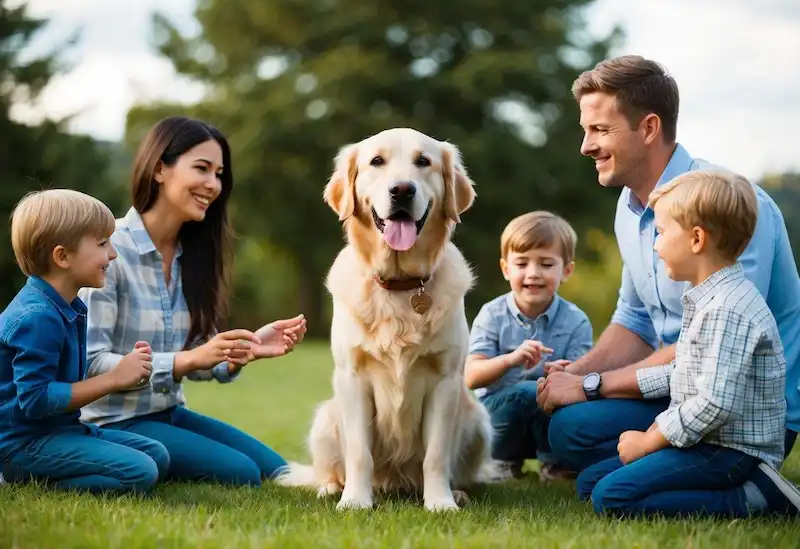
Golden Retrievers are widely appreciated for their sociable nature, intelligence, and enthusiasm for spending time with people. They are often considered by families because they enjoy participating in activities such as walks, games, and outdoor adventures. Their friendly appearance and willingness to learn can make them appealing companions for households that have enough time to provide exercise, training, and attention.
These dogs are generally active and benefit from regular physical activity. A daily walk, a game of fetch, or a supervised outdoor activity can help them use their energy in a positive way. They also need mental stimulation, so training exercises, interactive toys, and simple games can keep them engaged. Without enough activity, a young Golden Retriever may become restless or develop habits that are difficult to manage.
Their coats require regular brushing, particularly during periods of heavier shedding. Families should also keep up with routine veterinary care and learn about health concerns that can affect the breed, including joint and certain inherited conditions. Choosing a responsible breeder or adopting through a reputable organization can help families obtain information about the dog’s health history.
A Golden Retriever may be a good match for a household that enjoys an active lifestyle and can provide consistent companionship. However, its size and enthusiasm may be challenging around very young children if play is not supervised. Teaching the dog calm behavior and showing children how to interact respectfully are important parts of creating a positive relationship.
2. Labrador Retriever
The Labrador Retriever is another popular choice for households seeking an active and sociable companion. Labradors are often described as outgoing, curious, and eager to participate in family activities. Many enjoy playing outdoors, learning commands, and spending time with their favorite people. Their intelligence and trainability can make them suitable for families willing to provide structure and regular interaction.
One of the main considerations is their energy level. Labradors, particularly when young, may be very enthusiastic and need daily exercise. Walks, games, swimming where safe, and training sessions can help them stay physically and mentally engaged. A Labrador that does not receive enough activity may become overly excited at home, so families should make exercise part of their routine.
Their short coat is relatively easy to maintain, although they shed and benefit from regular brushing. Families should also pay attention to feeding habits because Labradors can be highly motivated by food. Maintaining an appropriate diet and activity level helps support their overall health.
Because Labradors can be strong and energetic, they may accidentally bump into small children during play. Adult supervision and basic obedience training are therefore essential. Families should also teach children not to disturb the dog while it is eating or resting. With consistent care and suitable routines, a Labrador can become an involved and affectionate member of the household.

3. Beagle
Beagles are small to medium-sized dogs known for their curious nature and strong sense of smell. They are often lively, playful, and interested in exploring their surroundings. Their size may make them easier to accommodate than some larger breeds, while their active personality can appeal to families that enjoy walks and outdoor activities.
A Beagle needs opportunities to explore and use its natural instincts. Walks that allow safe sniffing, food puzzles, and supervised games can provide useful mental stimulation. Because Beagles may follow interesting scents, secure outdoor areas and leash training are especially important. They should not be allowed to wander freely in places where they could become lost or encounter traffic.
Their short coat usually requires moderate grooming, although regular brushing can help manage shedding. Beagles can also be vocal, which is worth considering in apartments or homes with close neighbors. Training should be patient and consistent, using positive reinforcement and clear routines.
A Beagle may suit a family that has time for activity and enjoys an inquisitive companion. Children should learn to approach the dog calmly and respect its space, especially when it is eating or resting. As with every breed, a Beagle’s behavior around children depends on the individual dog and the way it has been raised and socialized.

4. Poodle
Poodles are intelligent dogs that come in different sizes, including Standard, Miniature, and Toy. This variety gives families several possibilities, although each size has different physical needs and considerations. Poodles are often appreciated for their ability to learn, their alertness, and their interest in interacting with people.
Their intelligence means they usually benefit from regular training and activities that challenge their minds. Learning commands, practicing simple tricks, playing interactive games, and exploring new environments can help prevent boredom. They can also be active, so families should provide daily exercise that matches the dog’s size, age, and health.
One of the breed’s most recognizable features is its curly coat. Although Poodles tend to shed less visibly than many other breeds, their coats require consistent maintenance. Regular brushing and professional grooming may be necessary to prevent tangles and keep the coat comfortable. Families should include these costs and responsibilities in their decision.
The size selected matters when children are involved. Standard Poodles are larger and more robust than Toy Poodles, which can be more delicate and vulnerable to accidental injury. Parents should consider the children’s ages, the dog’s temperament, and the household’s ability to supervise interactions. A well-trained Poodle with suitable care can be an engaging companion for many types of families.

5. Cavalier King Charles Spaniel
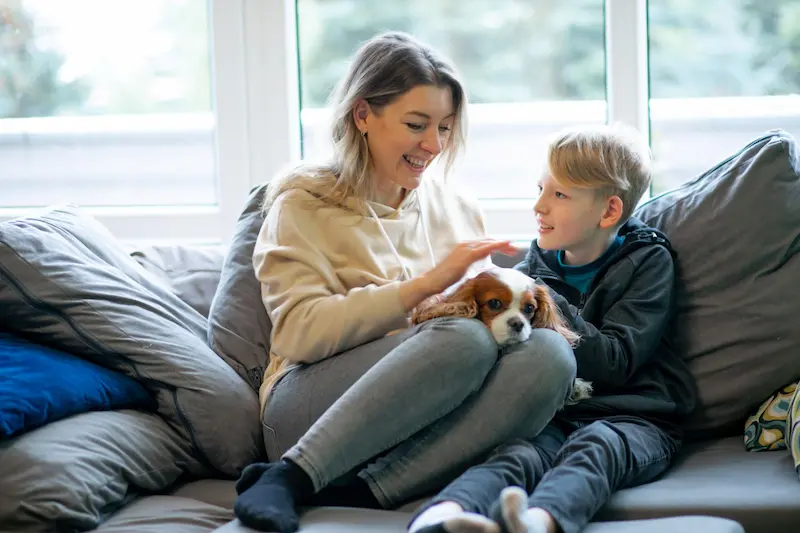
The Cavalier King Charles Spaniel is a small companion breed often associated with an affectionate and gentle personality. Many enjoy staying close to their people and taking part in quiet household activities. Their smaller size can make them suitable for homes where a large dog would be difficult to accommodate, although they still need daily walks, play, and attention.
Cavaliers generally enjoy companionship and may not be comfortable spending long periods alone. Families should consider how much time someone can spend with the dog during the day. If the household is frequently empty, it may be necessary to arrange suitable care and gradually teach the dog to remain alone for short periods.
Their coat needs regular brushing, particularly around the ears and feathered areas. Families should also research the breed’s health considerations before making a decision. Cavaliers can be predisposed to certain heart and neurological conditions, so veterinary guidance and responsible health screening are particularly important.
Because they are relatively small, children should learn to handle them gently and avoid carrying them without adult guidance. A Cavalier may be a lovely companion for a family that prefers a more relaxed dog and can offer plenty of affection, attention, and appropriate healthcare.
6. Bernese Mountain Dog
The Bernese Mountain Dog is a large breed recognized for its distinctive coat and strong build. These dogs are often described as affectionate, calm, and devoted to their households. Their size and appearance may be impressive, but they can also enjoy spending quiet time with the people they know.
Bernese Mountain Dogs need regular exercise, although many are not as constantly energetic as some working breeds. Daily walks and moderate outdoor activities can help support their physical health. They also benefit from early training because a large dog needs to learn how to walk politely, respond to commands, and avoid jumping on people.
Their thick coat requires frequent brushing, and shedding can be significant. Families living in warm climates should pay particular attention to heat management. Providing shade, fresh water, ventilation, and exercise during cooler parts of the day can help the dog remain comfortable.
The breed’s large size means that it may accidentally knock over a small child, especially when excited. Adult supervision is essential, and children should learn not to climb on or disturb the dog. Families should also discuss the breed’s health concerns and expected care costs with a veterinarian or responsible breeder before making a commitment.

7. Boxer
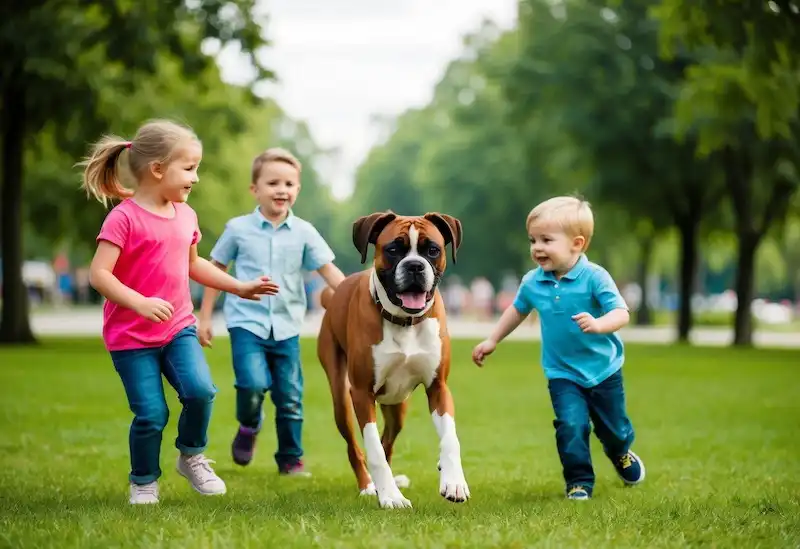
Boxers are energetic, playful dogs that often enjoy being involved in family activities. They are known for their athletic build and expressive personalities. A Boxer may appeal to a household that enjoys outdoor games, regular walks, and interactive training sessions.
Their enthusiasm can make them entertaining companions, but it also means that they need consistent guidance. Young Boxers may jump, run, and play energetically, which can be difficult for small children if the dog has not learned appropriate behavior. Basic obedience, impulse control, and calm greetings should be part of their training from an early age.
Their short coat is relatively easy to maintain, but their exercise and healthcare needs should not be overlooked. Boxers can be sensitive to extreme temperatures, particularly heat, so families should avoid strenuous activity during hot periods. They also have breed-related health risks that should be discussed with a veterinarian.
A Boxer may suit an active household with time for exercise and training. It is important to remember that play should always be supervised when young children are involved. A dog that learns to manage its excitement and children who understand how to interact respectfully can share a positive relationship.
8. Bichon Frise
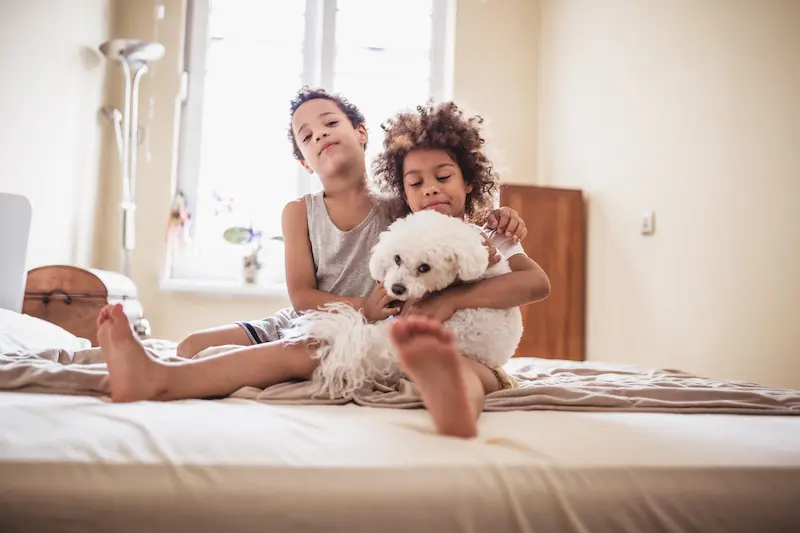
The Bichon Frise is a small dog recognized for its fluffy white coat and cheerful appearance. It is often considered by families looking for a companion that can adapt to different home environments. Bichons are generally sociable and enjoy interaction, although their individual personalities and experiences still play an important role.
Their small size can be convenient in apartments and homes with limited space. However, they need daily walks, playtime, and mental stimulation. They may enjoy learning simple tricks, playing with suitable toys, or spending time with family members. Their need for companionship should also be considered, as some Bichons may become distressed when left alone for extended periods.
Grooming is one of the main responsibilities associated with this breed. Their coat needs regular brushing and professional maintenance to prevent tangles. Families should be prepared for the time and cost involved in keeping it clean and comfortable.
Because Bichons are small, children should be taught not to pick them up roughly or treat them like toys. A Bichon Frise may be a good option for a family that wants a smaller companion and can provide gentle handling, regular grooming, and daily attention.
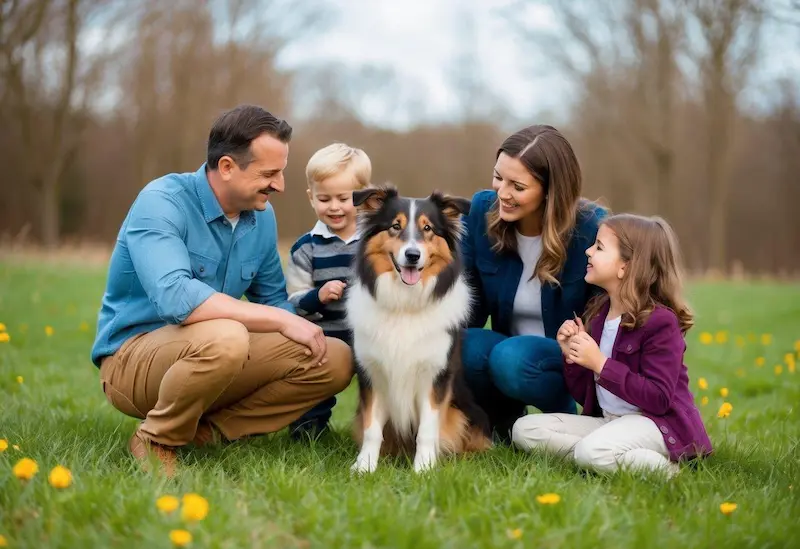
9. Collie
Collies are often admired for their intelligence, attentiveness, and strong connection with people. They have a history as herding dogs, which means they can be alert and responsive to movement. Many families appreciate their trainability and the possibility of involving them in walks, outdoor games, and activities that encourage learning.
Collies need regular exercise and mental stimulation. Training sessions, interactive toys, and structured activities can help them stay engaged. Because of their herding background, some may show an instinct to follow or gather moving children. This behavior should be managed through training rather than treated as harmless entertainment, especially when young children are involved.
Coat care depends on the type of Collie. Rough Collies have long coats that need regular brushing, while Smooth Collies have shorter coats that are generally easier to maintain. Both benefit from routine grooming and veterinary care.
A Collie may suit a family that enjoys spending time outdoors and can provide consistent training. Parents should supervise interactions and teach children to avoid running away from or teasing the dog. With appropriate guidance, the relationship can become a rewarding part of family life.
10. Newfoundland
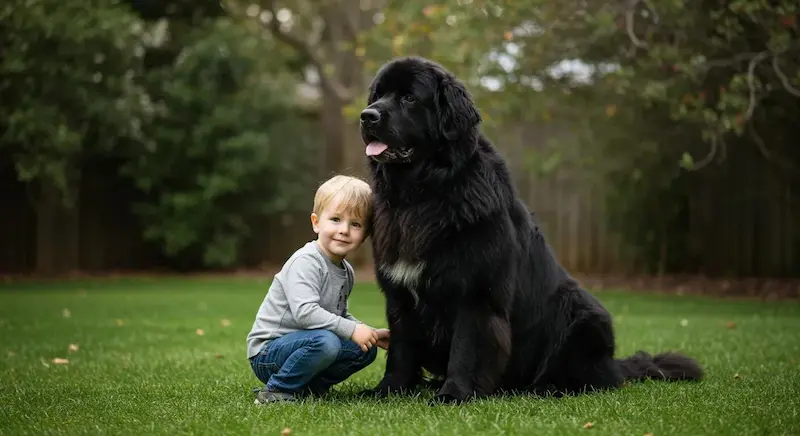
The Newfoundland is a very large dog often recognized for its thick coat and substantial build. It is commonly associated with a calm and gentle disposition, which is why some families consider it when researching large companion breeds. However, its size creates practical responsibilities that should be carefully evaluated before bringing one home.
Newfoundlands need regular exercise, but their activity should be appropriate for their age and physical condition. Many enjoy spending time outdoors and may have a natural affinity for water. Families should provide safe opportunities for movement and never assume that a dog can swim safely without supervision.
Their thick coat requires frequent brushing, and shedding can be considerable. They may also drool more than many other breeds, which is worth considering when planning household cleaning routines. Their large size means that food, transport, equipment, and veterinary care can be more expensive.
Although Newfoundlands are often described as gentle, no dog should be left unsupervised with a child. A large dog can accidentally knock over a toddler or cause injury during play. Families should make sure they have enough space, resources, and experience to manage a giant breed responsibly.
Best small dog breeds for families with children
Small dogs can be a practical choice for families living in apartments or homes with limited space, as they are often easier to accommodate and transport. However, their size does not automatically make them easier to care for. Breeds such as the Bichon Frise, Beagle, Poodle, and Cavalier King Charles Spaniel are worth researching because they have different temperaments and care requirements. Some enjoy close companionship and playtime, while others need more exercise, mental stimulation, or regular grooming.
When choosing a small dog, consider its personality, physical build, and ability to adapt to children. Very small dogs can be more vulnerable to accidental injuries if children handle them roughly, while more energetic breeds may need frequent walks and activities to stay healthy. Parents should teach children to approach dogs calmly, avoid pulling their tails or disturbing them while sleeping, and allow them to move away whenever they need space. Supervision is essential, especially with younger children who are still learning how to interact with animals.
Small dogs also need regular exercise, training, and opportunities to explore beyond the home. Short walks, interactive toys, gentle games, and positive training sessions can help keep them active and engaged. Families should also consider grooming, feeding, and veterinary care before making a decision. The most suitable small dog is not necessarily the smallest breed, but one whose temperament, energy level, and daily needs fit the household.
Best medium and large dog breeds for active families
Medium and large dogs can be good companions for families that enjoy outdoor activities and have enough time to provide regular exercise. Golden Retrievers and Labrador Retrievers are often considered because many enjoy walks, interactive games, and learning new commands. Boxers may also suit active households, while Collies can appeal to families interested in training and activities that challenge a dog’s mind. Each breed has its own characteristics, so it is important to research its temperament and care requirements before choosing.
Larger breeds, such as the Bernese Mountain Dog and Newfoundland, may be more comfortable with moderate exercise and a home environment where they have enough room to move and rest. Their size and strength require particular attention when young children are present, as even a friendly dog can accidentally knock over a child while playing. Families should establish consistent rules, supervise interactions, and provide training so the dog learns to walk calmly on a leash and respond to basic commands.
Daily care should also be part of the decision. Medium and large dogs may need more food, appropriately sized equipment, and additional planning for transportation and veterinary visits. Their exercise routines should match their age and health, as puppies and older dogs may have different physical limitations. Training, scent games, and interactive toys can provide mental stimulation alongside walks and outdoor play. For active families, the right companion is one whose needs can be met consistently without making daily care difficult to manage.
Best family dogs for homes with limited space
Living in a small apartment or house does not mean a family cannot have a dog. Many dogs can adapt to different home sizes as long as they receive enough exercise, attention, and opportunities to rest. Breeds such as the Bichon Frise, Cavalier King Charles Spaniel, and some Poodles may be worth considering, although their needs vary. A dog’s size alone does not determine how much activity it requires, since some small breeds are energetic while certain larger dogs can be relatively relaxed indoors after getting enough exercise.
Creating a comfortable environment is essential when sharing a limited space with a pet. Choose a quiet area for the dog’s bed, away from busy walkways and places where children frequently play. Make sure food and water bowls are accessible and that the dog has enough room to move without constantly encountering obstacles. Daily walks are especially important when there is no private garden, as they provide opportunities to exercise, explore, and become familiar with different surroundings.
Families should also consider noise, shared spaces, and the dog’s ability to adapt to apartment living. Sounds from neighbors, elevators, doors, and other animals may cause some dogs to bark or feel uncomfortable. A predictable routine, gradual exposure, and positive training can help them adjust. Indoor activities such as puzzle toys, simple training exercises, and interactive games can complement daily walks. Ultimately, the best choice depends on the dog’s temperament, energy level, and care requirements, as well as the family’s ability to provide a comfortable and consistent routine.
How to choose the right dog based on your children’s ages
The ages of the children in a household can influence which dog is most suitable, since a family with toddlers may have different needs from one with teenagers. However, no breed is automatically the right choice for a specific age group. Families should consider the dog’s individual temperament, training, previous experiences, and comfort around children. For babies and toddlers, constant adult supervision is essential because young children may make sudden movements, pull a dog’s fur, or approach it while eating or sleeping. Providing separate spaces and a quiet resting area can help prevent stressful interactions.
Children in preschool and primary school can gradually learn simple rules for interacting with animals. They may help refill the water bowl, choose a toy for a supervised game, or participate in gentle petting. Parents should teach them not to chase the dog, pull its ears, disturb it while eating, or take objects from its mouth. Older children and teenagers may be ready to participate in more responsibilities, such as brushing, preparing meals, practicing commands, or walking the dog with adult guidance. They should also learn to recognize signs of discomfort, such as turning away, freezing, or repeatedly licking their lips.
In households with children of different ages, adults should establish consistent rules that everyone follows. The dog needs a safe place where it can rest without being disturbed, and playtime should always be supervised according to the children’s ages and maturity. Families should also remember that adults remain responsible for the animal’s care, even when teenagers promise to handle daily tasks. The best choice is a dog whose personality and needs fit the entire household, allowing children and their companion to develop a positive relationship over time.
You might also be interested in: Best areas of Houston to live for families

Tips for introducing a dog into a home with children
Bringing a dog home is an important change for the entire family, and the animal may need time to become familiar with new people, sounds, smells, and routines. Before its arrival, explain to children that a dog is not a toy and should be allowed to explore its surroundings at its own pace. Encourage them to remain calm, avoid shouting or running toward the animal, and wait for it to approach voluntarily. Preparing a quiet space with a bed, water, and its belongings can also help the dog feel more secure during the transition.
The first meeting should take place in a calm, controlled environment with an adult present at all times. Avoid crowding the dog or forcing physical contact, such as hugs, and give it space if it appears nervous or tries to move away. Once the dog begins settling in, introduce everyday activities gradually, including visitors, household noises, and playtime. Establishing predictable schedules for feeding, walks, training, and rest can make the adjustment easier, while positive reinforcement helps the animal associate new experiences with rewarding moments.
Building trust takes time, and not every dog adapts at the same pace. Some may become comfortable within a few days, while others need several weeks or longer to adjust to their new surroundings. Avoid expecting an immediate bond with the children and continue supervising their interactions as the relationship develops. If the dog shows persistent fear, aggression, or severe anxiety, consult a veterinarian or qualified animal behavior professional. Patience, clear boundaries, and consistent care can help the new companion become a comfortable part of family life.
How to create a safe and comfortable home for your dog
Preparing your home before bringing a dog into the family can help prevent accidents and create a comfortable environment for everyone. Start by choosing a quiet resting area where the animal can sleep without being disturbed by constant movement or noise. Children should understand that the dog’s bed is a private space and that they must not wake it up or force it to play. It is also important to keep cleaning products, medicines, pesticides, and other potentially harmful substances out of reach. Certain foods, including chocolate, grapes, raisins, onions, garlic, and products containing xylitol, can also be dangerous for dogs.
Check the rest of your home for objects that could cause injuries or be swallowed, such as cables, small toys, plastic packaging, and household items. Give the dog its own toys according to its age, size, and chewing habits, and encourage children to keep their belongings off the floor. Outdoor areas also need attention: fences and gates should be secure, balconies and windows should have appropriate protection, and plants should be checked for potential toxicity. These precautions are especially important during the first weeks, when the dog is still learning its new environment.
A comfortable home also depends on consistent daily care. Provide fresh water, suitable food, regular exercise, grooming, and veterinary attention according to the dog’s needs. Establish routines for feeding, walking, and resting, while allowing the animal enough time to relax or move away from interactions. If children participate in care activities, an adult should guide them and remain responsible for the dog’s well-being. By combining practical safety measures with patience and positive training, families can create an environment where both children and dogs feel secure and respected.
Final thoughts on finding the right dog for your family
Choosing among the best dog breeds for families is about finding a companion whose personality, energy, and care needs fit your household. Golden Retrievers, Labradors, Beagles, Poodles, and other breeds can bring joy to family life, but every dog is an individual. Consider your children’s ages, daily routine, available space, and long-term responsibilities before deciding. With patient training, adult supervision, and respectful interactions, children and dogs can build a meaningful bond and enjoy many happy moments together.